
Travel connects people, and in many ways, it creates memories that extend beyond the moment. Sisterhood travel across the Atlantic has always carried more than leisure—it has carried language, ritual, and survival. There are photographs of women traveling together that suggest lightness—linen dresses, shared balconies, laughter suspended in golden hour. But historically, women in motion have rarely traveled lightly.
Across civilizations, when women moved together, something structural was happening. They were trading. Preserving language. Transmitting ritual. Negotiating power within systems that did not formally recognize their authority. Travel as Sisterhood did not begin as leisure. It began as continuity. Beneath the aesthetics of modern girls’ trips and curated itineraries, the deeper function remains intact. Women move together to preserve each other.
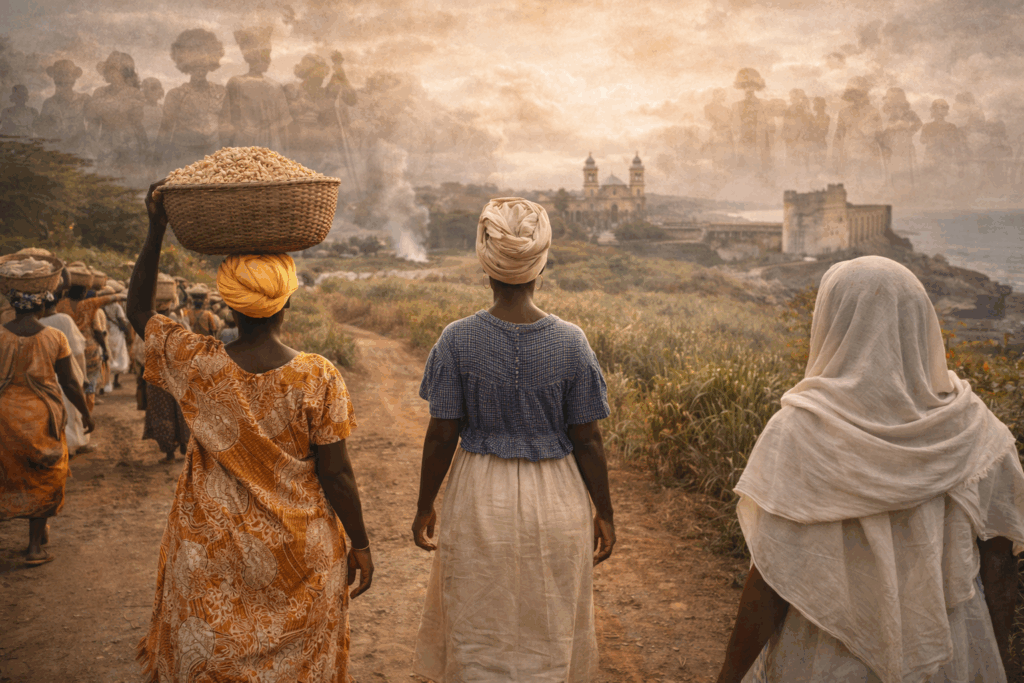
Long before commercial tourism defined movement as recreation, women were already moving in collectives. In West Africa, market networks were sustained by women who traveled regionally to exchange goods and information. These routes were not simply economic corridors—they were communication systems. Political shifts, kinship alliances, ritual knowledge, and strategic intelligence traveled alongside textiles and grain.
In the Caribbean, enslaved and later emancipated women often walked miles between plantations and town centers, building cohesion in landscapes engineered to fragment it. Movement allowed information to circulate beyond surveillance.
In Mediterranean and Middle Eastern societies, pilgrimage networks created temporary reconfigurations of power. Women who were confined within domestic hierarchies stepped into sacred geographies that granted voice, presence, and mobility.
Across cultures, movement created breathing room. When women moved together, they were not sightseeing.
They were recalibrating systems. Travel was never just distance.
It was design.
The African diaspora fractured geography and lineage, yet continuity survived—largely through women. Foodways endured through maternal instruction. Songs survived through repetition. Spiritual systems adapted under new names.
Healing practices persisted quietly in kitchens, courtyards, and back rooms. What institutions attempted to erase, women carried informally.
Modern sisterhood travel echoes that pattern. When women of the diaspora travel together—to Ghana, Brazil, Colombia, Portugal—they are not merely consuming culture. They arereassembling lineage. They are tracing memory across water. Questions surface in these spaces: Who were our grandmothers? What did they carry? What did they survive that we no longer have to? Travel becomes living archive. And sisterhood becomes the container strong enough to hold it. In this way, Travel as Sisterhood becomes more than shared itinerary—it becomes collective reconstruction.
Sisterhood travel across the Atlantic Ocean did not only carry bodies. It carried labor systems, ritual technologies, language, cosmology, and resistance. Across that expanse, women stabilized continuity. To trace sisterhood across Accra, Salvador, Cartagena, and Lisbon is not to assemble destinations. It is to follow a current.
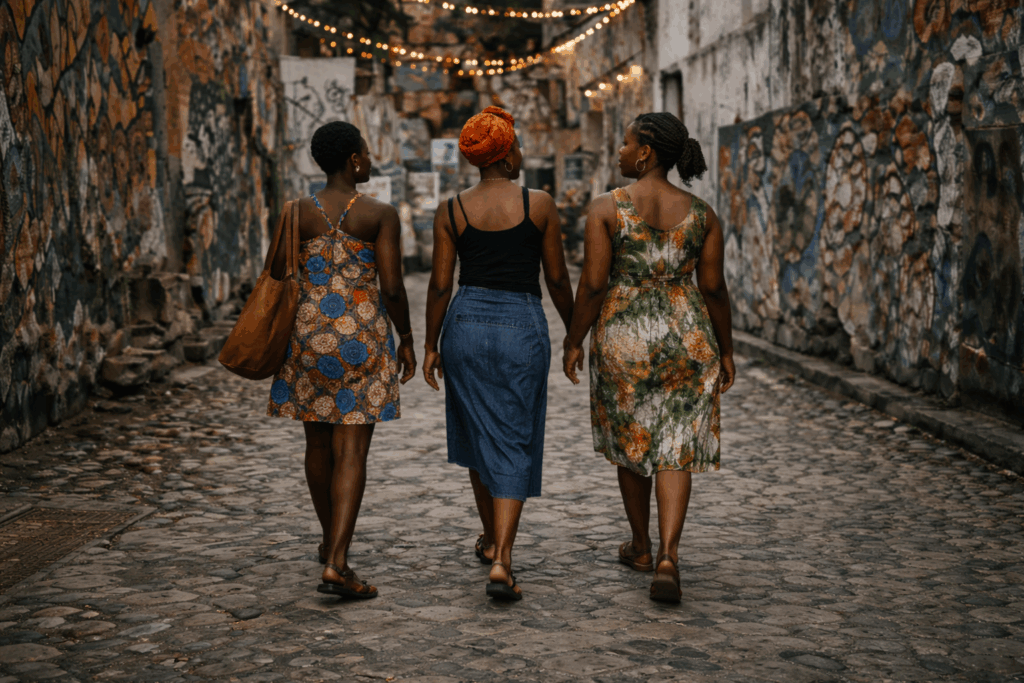
In Accra, sisterhood moves forward.
Contemporary Ghanaian women shape identity in public space—curators, designers, entrepreneurs, cultural architects. For women of the diaspora, return does not feel abstract. It feels relational. Sisterhood reframes memory as expansion rather than grief.
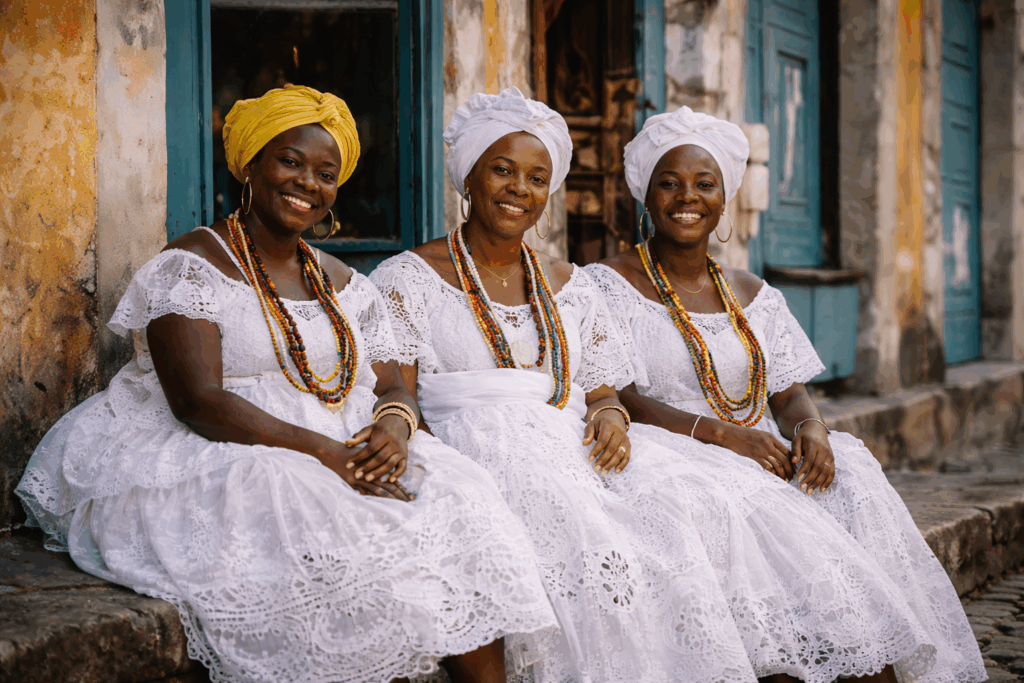
In Salvador, sisterhood safeguards preservation.
Afro-Brazilian women have anchored Candomblé houses, culinary traditions, and communal rhythm through centuries of racial hierarchy. The Baianas dressed in white lace are not aesthetic symbols; they are institutional memory. Sisterhood here is disciplined continuity.
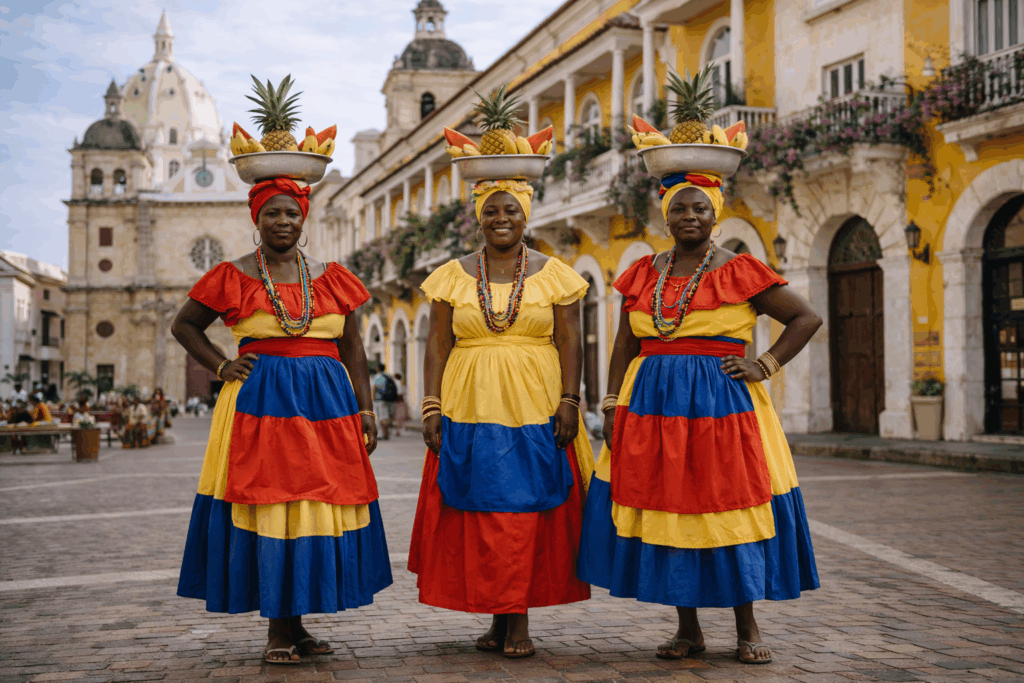
In Cartagena, autonomy stands in public view.
San Basilio de Palenque, recognized by UNESCO as the first free Black town in the Americas. Their presence is declarative, not decorative. Sisterhood carries liberation as inheritance—visibility as right.
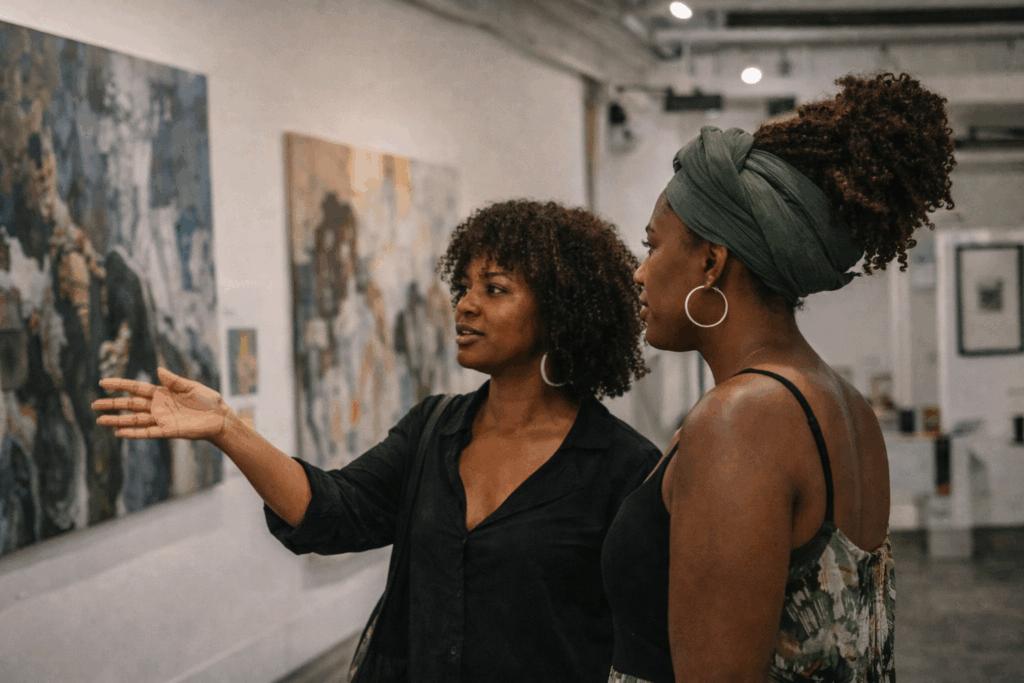
In Lisbon, reclamation unfolds within the former center of empire.
Afro-Portuguese women reshape national memory through art, scholarship, activism, and entrepreneurship. Sisterhood in Lisbon requires literacy. It asks women to walk European space with context—to understand how culture moved back across the ocean and reconfigured the capital itself.
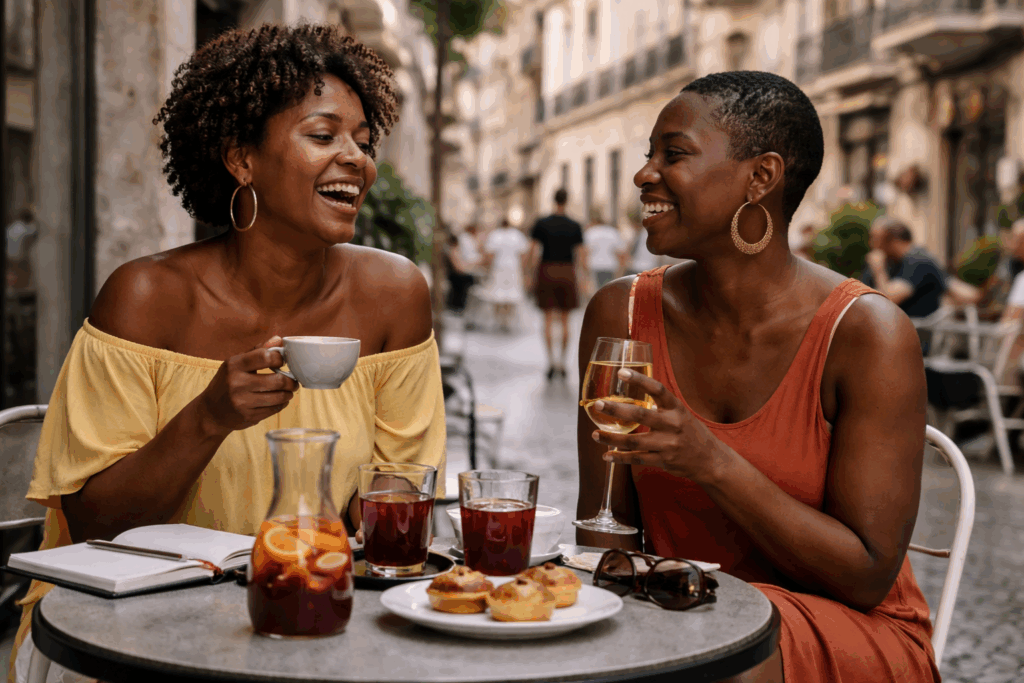
Taken together, these cities form an Atlantic arc of continuity. In this sense, sisterhood travel across the Atlantic becomes a living corridor of memory rather than a series of destinations. Accra embodies return. Salvador safeguards preservation. Cartagena affirms autonomy. Lisbon confronts reclamation. Across each geography, the pattern holds: women move, and culture survives. Travel as Sisterhood across the Atlantic is not symbolic—it is structural. Sisterhood is not leisure layered onto travel. It is the mechanism through which memory remains intact across oceans. And when women step into that lineage consciously, they do not simply visit these cities—they recognize themselves within them.
Modern life isolates women into performance roles: professional, partner, parent, provider, stabilizer. Isolation fragments identity. Travel disrupts that fragmentation. In unfamiliar terrain, responsibility redistributes. Emotional labor decentralizes. Liminal space—time outside ordinary structure—allows identity to expand. Anthropologists have long observed that movement loosens self-concept. Geography shifts; possibility widens.
Shared rooms lead to shared truth. Long dinners lead to recalibration. Witnessing leads to courage. A friend may say, “You look different here.” That sentence can reorganize a woman’s future. Because it reflects possibility she may not have seen alone.
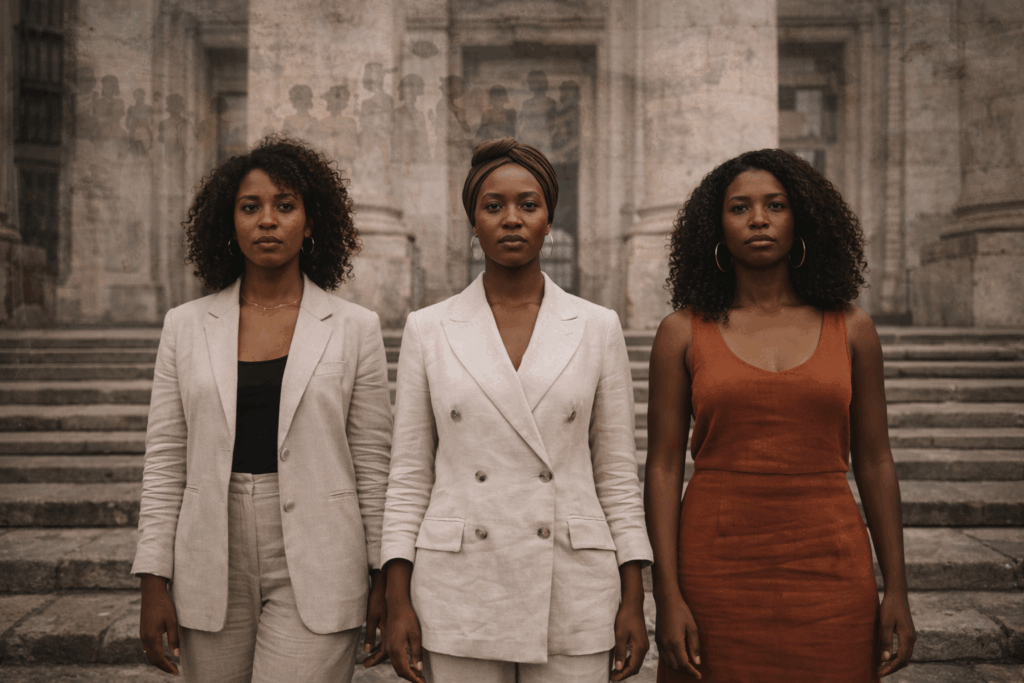
Historically, women’s collective movement has preceded change. West African market women organized resistance against colonial taxation. Caribbean women participated in labor revolts. Civil rights organizers traveled city to city building durable networks.
Movement was strategy. Modern sisterhood travel may not carry protest banners, yet it continues that lineage. Women exchange information. Reevaluate careers. End unhealthy partnerships. Launch businesses. Relocate cities. Rewrite inherited expectations. These decisions rarely emerge in isolation. They emerge after being witnessed.
Witnessing is political. When one woman says, “You deserve more,” she interrupts limitation that may have been normalized for generations.Travel becomes catalyst.
We do not curate girls’ trips. We design environments for expansion. Shared spaces that encourage sustained conversation. Cultural immersion rooted in context rather than spectacle. Pacing that allows both exploration and reflection. Because the destination is not the villa or the photograph. The destination is clarity. Sisterhood travel, when approached with depth, becomes rehearsal for the next version of self. Women return home reorganized. More decisive. More aligned. More honest about what they want.
Across the Atlantic world and beyond, women in motion have always signaled continuity. Continuity of ritual. Of language. Of resistance. Of memory. Of self. Modern sisterhood travel sits within that lineage whether we name it or not. When women move together, they carry more than luggage. They carry unfinished inheritance. And when they return stronger than they left, they extend that inheritance forward. At its strongest, sisterhood travel across the Atlantic is not about movement alone—it is about continuity carried consciously. Travel as Sisterhood is not trend. It is architecture. And it is still being built.